

Most homes are not broken into because of one dramatic flaw. They are broken into because of several small ones that nobody noticed: a strike plate held in with short screws, a spare key that has been under the same flowerpot for six years, a side window hidden behind an overgrown shrub. A home security audit is how you find those small gaps before someone else does.
The good news is that you do not need special training or expensive equipment. You need a plan, a notebook, about two hours and the willingness to look at your home the way a stranger would. This guide walks you through each part of a practical home security audit, from the front door to the cabinet where you keep your passport, and shows you how to turn what you find into a simple action plan.
What Is a Home Security Audit?
A home security audit is a structured walk-through of your property to find weak points in how it is protected. It covers the physical barriers (doors, frames, locks, windows), the people who have access (keys, codes, app users), the environment around the house (lighting, landscaping, visibility) and the things inside that deserve their own protection (documents, valuables, firearms and medications).
The word "audit" matters. It is not a shopping trip and it is not a guess. You inspect, you write down what you see, and only then do you decide what to fix. That order keeps you from spending money on gadgets while a basic weakness, such as a loose door frame, stays exactly where it was.
Before You Start: How to Plan Your Home Security Audit
A little preparation makes the audit faster and far more useful.
- Pick two times of day. Walk the outside once in daylight and once after dark. Lighting problems and hiding spots are almost invisible at noon.
- Bring simple tools. A flashlight, a screwdriver, a notebook or phone for photos, and a list of every key and code you know about.
- Involve the household. Ask everyone who lives with you which doors they use, where they leave keys and who they have shared codes with. You will learn things you did not know.
- Work in a fixed order. Outside to inside, front to back, ground floor to upper floors. A set route keeps you from skipping rooms.
- Rate each finding. Mark every issue as "fix now," "fix this month" or "plan for later." This becomes your action plan at the end.
Step 1: Inspect Your Exterior Doors
Exterior doors are the first place to look during any home security audit because they are the most common way into a house. Check every one of them: front, back, side, patio and the door between the garage and the house.
Door and Frame Condition
Open and close each door slowly. Does it latch on its own, or do you have to push or lift it? A door that sticks often gets left unlatched. Look for gaps between the door and frame, cracks in the wood near the lock, and rot at the bottom of the frame. Exterior doors should be solid wood, metal or fiberglass. A hollow-core interior door used as an exterior door is a serious weak point.
Strike Plates and Hinges
Remove one screw from the strike plate (the metal plate on the frame where the bolt goes). If it is shorter than about two inches, it only reaches the thin door trim, not the wall framing behind it. Longer screws in the strike plate and the top hinge are one of the cheapest upgrades you can make. Also check that hinge pins on outward-swinging doors cannot simply be tapped out from outside. Our guide to front door security tips covers deadbolts, frames and strike plates in more detail.
The Garage Entry Door
The door from the garage into the house is often treated like an interior door, with a basic knob lock or no lock at all. If someone gets into the garage, that door is the only thing left between them and your kitchen. Give it the same deadbolt and frame check as your front door.
Step 2: Audit Your Locks and Who Has Access
The best lock in the world does not help if too many people can open it. This part of the audit is about the locks themselves and about access.
Check the Locks
- Every exterior door should have a deadbolt, not just a knob or handle lock.
- The bolt should extend fully and smoothly when the door is closed. If you have to push the door to make it throw, the strike is out of line.
- Look for worn, wobbly or sticking cylinders and keys that have to be jiggled. Those are signs of wear.
- Note the age of each lock. If you cannot remember when it was installed, it is probably time to look at it closely.
Count the Keys and Codes
Write down every person who has a key or code: family members, a neighbor, a dog walker, a cleaner, a contractor from last year, a previous owner. If the list is longer than you expected, or if you do not know how many keys are out there, rekeying or replacing the locks is a sensible fix.
This is also where modern locks earn their place. With keypad and Bluetooth deadbolts, you can change a code in seconds instead of collecting keys back. If you are considering an upgrade, our range of electronic deadbolts for residential doors includes keypad and Bluetooth models with a key override, so you keep a backup if the batteries ever run low.
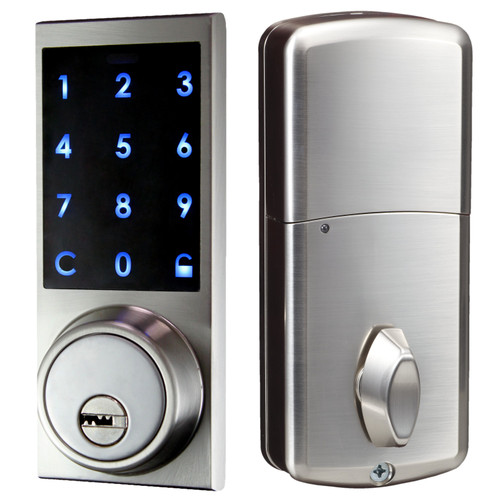
Bluetooth Digital Panel Deadbolt
Keypad entry, app access you can share by date and time, and a key backup.
Shop NowStep 3: Check Windows and Sliding Doors
Windows are easy to overlook because we rarely lock and unlock them. Go room by room and test each latch. Does it close fully? Does it actually lock, or is it just a catch? Ground-floor windows, basement windows and windows hidden from the street deserve the most attention.
- Replace broken or missing window latches.
- Add window pins or stops on ground-floor windows you open for air, so they cannot be pushed wider from outside.
- Check that window air conditioners are secured and cannot simply be pushed in.
- Look at basement window wells. Are they covered, or could someone climb in unseen?
Sliding patio doors need a separate check. Many factory latches are light, and some doors can be lifted out of their track when closed. Try lifting the door gently with it locked. If it moves, it needs anti-lift protection. Our step-by-step guide to making a sliding door more secure explains track blockers, anti-lift fixes and secondary locks.
Step 4: Walk the Exterior: Lighting, Landscaping and Visibility
Now step back and look at your home from the street, the sidewalk and the back yard. The question is simple: where could someone stand, work on a door or window, and not be seen?
Landscaping
Tall hedges and dense shrubs beside doors and windows give cover to anyone trying to get in. Trim bushes below window height and cut tree branches that could act as a ladder to a second-floor window or balcony. Thorny plants under ground-floor windows are a useful, low-cost deterrent.
Lighting
During your after-dark walk, note every dark corner near an entry point. Motion-activated lights over doors, the garage and the back of the house make approach far less comfortable for an intruder. Check that existing fixtures work and that bulbs are not hidden by branches.
Clues and Tools
Look for things that help a burglar: ladders left against the house, tools in an unlocked shed, packages sitting on the porch, or an empty garage with the door left up. A home that looks unoccupied or easy is more likely to be picked. Our article on what makes a home a target for burglars covers these warning signs.
Finally, make sure your house number is easy to read from the street. If you ever need police, fire or medical help, responders need to find you quickly.
Step 5: Look Inside: Valuables, Documents and Private Spaces
A home security audit should not stop at the front door. Assume, for a moment, that someone got inside. What would they find, and how quickly?
- Important documents. Passports, birth certificates, property deeds, tax records and spare checks should be stored together and locked, not spread through a desk drawer.
- Jewelry and cash. The main bedroom is usually searched first. A locked drawer or a hidden compartment elsewhere is a better choice than the top dresser drawer.
- Home office. Laptops, external drives and paperwork with personal details deserve a lockable cabinet.
- Spare keys and car keys. Keys left on a hook by the door are an invitation. Keep them out of sight.
Hidden cabinet locks are a practical answer here. An RFID lock mounts on the inside of a drawer or cabinet door, so there is no keyhole on the outside to signal that something valuable is behind it. You open it by holding a card or fob against the outside of the door.

Hidden RFID Cabinet Lock, Gen 3
Mounts out of sight inside the cabinet; comes with 3 cards already programmed.
Shop NowStep 6: Secure Firearms, Medications and Hazardous Items
Some items in your home need protection from more than burglars. They also need to be kept away from children, visitors and anyone who should not handle them.
Firearms
If you own firearms, your audit should confirm that every one of them is stored locked when it is not in your direct control. Check where each firearm is kept, who knows the code or has the key, and whether ammunition is stored separately. Storage and transport laws vary by state, so check the rules where you live. A hidden RFID lock inside a gun cabinet or stand keeps the storage discreet while giving quick access to authorized adults.
Medications and Chemicals
Prescription medicines, cleaning chemicals, pool supplies and garage solvents should be in a locked cabinet, especially if children or teenagers live in or visit the home. A simple lock on the right cabinet removes a real risk.

Hidden RFID Lock for Gun Cabinets
Hidden 13.56 MHz RFID lock with an A/C power option for gun safes, stands and cabinets.
Shop NowStep 7: Review Your Habits and Technology
The last part of the audit looks at routines, because the strongest hardware fails if daily habits leave it unused.
- Locking routine. Is there a set time each night when someone checks every door, including the garage?
- Hidden spare keys. If there is one under a mat, rock or planter, move it. These spots are the first ones checked.
- Codes. Avoid obvious choices such as birthdays, street numbers or 1234, and change codes after a contractor or house guest finishes.
- Batteries. Electronic locks need fresh batteries. Put a reminder in your calendar and replace them when the low-battery warning starts.
- App accounts. If you use a lock app, protect the phone with a passcode and remove users who no longer need access.
- Alarms and cameras. If you have them, test them. Make sure sensors work and that you still get alerts.
Our guide to electronic lock best practices goes deeper into codes, access sharing and battery care.
Turn Your Findings Into an Action Plan
At the end of your walk-through you will have a list. Sort it into three groups so you can act on it without feeling overwhelmed.
- Fix now (today or this week): longer strike plate screws, moving the hidden spare key, locking a window that was left open, trimming the worst shrubs, changing a shared code.
- Fix this month: replacing worn locks, adding a deadbolt to the garage entry door, motion lights, window pins, locking cabinets for documents and medicines.
- Plan for later: new exterior doors or frames, an alarm or camera system, bigger landscaping changes.
Then put the next audit on your calendar. Once or twice a year is a good rhythm, and you should also run one after moving in, after a break-in nearby, or after any change in who has access to your home.
Home Security Audit Checklist
- All exterior doors solid, latching on their own, with no frame damage
- Deadbolt on every exterior door, including the garage entry door
- Strike plates and top hinges fixed with long screws
- Complete list of everyone with a key, code or app access
- Window latches working; ground-floor windows pinned
- Sliding doors cannot be lifted from the track
- Shrubs trimmed below window height; no hidden approach routes
- Motion lights at every entry point, working after dark
- No ladders or tools left outside; packages collected
- Documents, valuables and spare keys locked away
- Firearms locked; medications and chemicals in a locked cabinet
- Electronic lock batteries fresh; app users reviewed
- Next audit date set
Frequently Asked Questions
How often should I do a home security audit?
Once or twice a year works for most homes. Also do one when you move into a new house, after renovations, after a break-in in your area, or when someone with a key moves out or stops working for you.
Can I do a home security audit myself?
Yes. Most of the checks in this guide need only a flashlight, a screwdriver and a notebook. If you find damaged frames or doors, or you want an alarm system designed for your home, that is the point to bring in a professional.
What is the most common weakness found in a home security audit?
Doors are the usual problem: weak strike plates, locks that do not fully engage, garage entry doors with no deadbolt, and too many keys in circulation. These are also some of the cheapest issues to fix.
Do I need smart locks after a security audit?
Not necessarily. A well-installed mechanical deadbolt is a strong lock. Keypad and Bluetooth deadbolts help most when access changes often, for example with sitters, cleaners or rental guests, because you can change or share codes without handing out keys.
Should the inside of my home be part of the audit?
Yes. Locking up documents, valuables, firearms and medications limits the damage if someone does get in, and protects children and visitors at the same time.
Start Your Home Security Audit Today
A home security audit costs little more than an afternoon, and it replaces guesswork with a clear list of what to fix. Start with your doors and locks, count who has access, walk the outside in daylight and after dark, and then look inside at what deserves its own lock. Most of the improvements you find will be quick and inexpensive.
When your audit points to new hardware, Lock Connection can help. Browse our keypad and Bluetooth deadbolts for your exterior doors, and our hidden RFID cabinet locks for the drawers and cabinets that hold your most important things.