
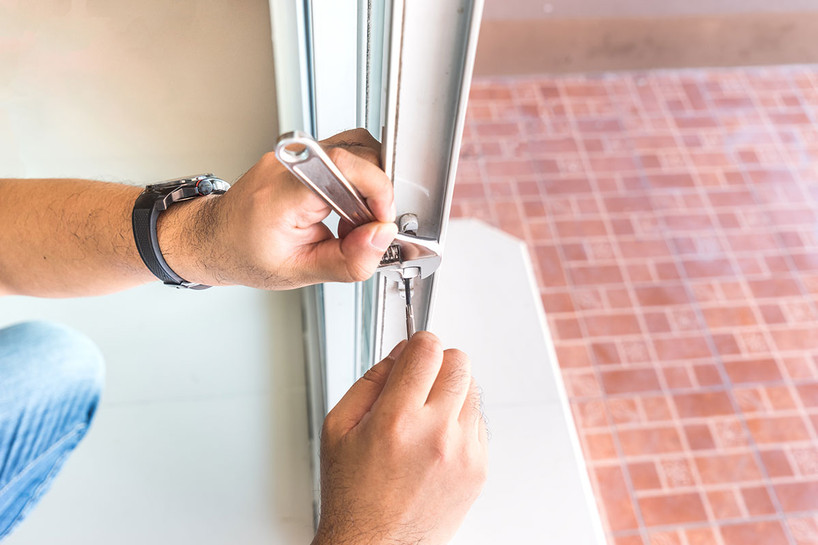
Sliding glass doors are one of the best features a home can have. They flood a room with natural light, open onto the patio or deck, and make summer evenings feel bigger. They are also one of the most overlooked weak points in a home. Improving your sliding door security doesn't require a remodel or a big budget. Most of the fixes in this guide take less than an afternoon, and several cost next to nothing.
Below you'll learn why sliding doors are easier to defeat than a typical hinged door, how to check the door you already have, and a layered set of upgrades, from a simple track bar to anti-lift hardware and glass protection, that make your patio door far harder to get through.
Why Sliding Doors Are a Weak Spot in Home Security
A standard front door swings on hinges, closes against a solid frame, and is usually locked with a deadbolt that throws a steel bolt deep into the jamb. A sliding door works very differently. The movable panel rides on rollers in a track, and in most cases it is held shut by a small latch or hook built into the handle. That design has a few built-in weaknesses:
- Light-duty factory latches. The hook latch on many patio doors is small and is often held in place by just a couple of screws. With enough force, or a bit of wiggling, it can slip free of its keeper.
- Lift-out panels. Sliding panels are installed by lifting them up into the top track and dropping them onto the bottom track. If there is too much clearance at the top, the same trick can be used to lift the panel out from the outside, bypassing the latch entirely.
- Large areas of glass. Glass lets anyone outside see what's inside, and it is the most obvious target if someone is determined to get in.
- Out-of-sight locations. Patio doors usually face the backyard, where fences, sheds and landscaping hide an intruder from neighbors and the street.
The good news is that every one of these weaknesses has a practical fix. If you want to understand the bigger picture of what draws unwanted attention to a property, our guide to what can make your home a target for burglars is a helpful companion to this article.
Step 1: Test the Lock You Already Have
Before you buy anything, find out how well your current latch actually works. This five-minute test tells you where to focus.
How to test your sliding door latch
- Close the door fully and engage the latch.
- Pull firmly on the handle. The door should not move at all. If it rattles, shifts or pops open, the latch isn't catching its keeper properly.
- Grip the panel and try to lift it straight up. Any noticeable vertical play is a warning sign that the panel could be lifted off its track.
- Open the door and look at the keeper (the metal piece on the frame the hook grabs). Check for loose screws, bent metal or a keeper that has shifted out of line.
- Run the door back and forth a few times. A door that sticks, grinds or jumps is often a sign of worn rollers or a dirty track, which can also stop the latch from lining up.
Simple fixes for a weak latch
Many latch problems come down to alignment. Tightening loose screws, or adjusting the keeper so the hook bites into it fully, can make a surprising difference. If the screws have stripped the frame, longer screws that reach solid material will hold better. When the latch mechanism itself is worn, bent or broken, replacing the handle-and-latch set is usually inexpensive and worth doing before you add any other hardware. Many of the same troubleshooting habits covered in our article on common door lock issues and how to resolve them apply here too, from sticking mechanisms to misaligned strike plates.
Step 2: Add a Security Bar or Track Blocker
A track blocker is the classic, low-cost way to stop a sliding door from opening, even if the latch is defeated. The idea is simple: place something rigid in the bottom track so the moving panel physically can't slide.
The DIY dowel or metal bar
Measure the gap in the bottom track between the edge of the closed sliding panel and the far side of the frame. Cut a length of thick wooden dowel, or a piece of metal bar, to fit snugly in that space. Drop it in the track at night or whenever you leave home. If someone forces the latch, the panel still has nowhere to go.
A few tips for getting it right:
- Cut it tight. A loose bar can be jiggled or knocked out of the way. It should fit with just a little clearance.
- Choose a sturdy material. A thick hardwood dowel or metal bar resists snapping far better than a thin stick.
- Paint or finish it. A painted bar blends in with the track and is easy to spot when you need it.
Adjustable security bars
If you'd rather not cut anything, adjustable sliding door security bars are widely available at hardware stores. Some sit in the bottom track like a dowel, while others brace across the middle of the door at handle height. A mid-height bar has one extra benefit: it is clearly visible from outside, which tells anyone looking in that the door is reinforced. Many models flip up out of the way when you want to use the door, which makes them easy to use every day.
Step 3: Stop the Door From Being Lifted Out of Its Track
A track bar stops the panel from sliding, but it doesn't always stop the panel from being lifted. That's why anti-lift measures are one of the most important parts of sliding door security.
Anti-lift screws in the upper track
One of the most effective fixes is also one of the cheapest. Drive a couple of screws into the upper track (the header) above the sliding panel so the screw heads sit just above the top of the panel. Leave only enough clearance for the door to slide freely. With less room above it, the panel can't be raised high enough to clear the bottom track. Test the door afterward to make sure it still opens and closes smoothly. If you're unsure about the frame material, a local handyman can do this in minutes.
Anti-lift blocks and devices
Some manufacturers offer small anti-lift blocks or brackets that mount in the top track and do the same job as the screw method, with a neater finish. Check your door's manual or the maker's instructions for the right part, especially on vinyl or aluminum frames.
Keep the rollers and tracks in good shape
Rollers and tracks are easy to ignore until the door starts sticking. Worn or poorly adjusted rollers can leave the panel sitting lower than it should, which changes the gap at the top and can make the latch miss its keeper. To keep things working as intended:
- Vacuum the bottom track regularly and wipe out grit, leaves and pet hair.
- Check the rollers for cracks, flat spots or wobble. Many doors have adjustment screws near the bottom edge of the panel that raise or lower the rollers.
- Adjust the rollers so the panel slides smoothly and sits snugly in the frame, then re-test the latch and your anti-lift screws.
- Replace rollers that are worn out. It's a common, affordable repair.
Step 4: Add a Secondary Sliding Door Lock
A factory latch alone is rarely enough. A secondary lock adds a second point of resistance that has to be defeated before the door will open. There are several common styles, and they can be combined.
- Pin locks (drill-through pins). A hole is drilled through the overlapping frames of the fixed and sliding panels, and a steel pin drops through both. The panels are then pinned together, which resists both sliding and lifting. It is one of the most effective and least expensive options.
- Foot locks. A foot-operated lock mounts at the bottom of the sliding panel and drops a pin into the floor or track. It's easy to engage without bending down.
- Loop or hinged locks. A small bracket on the frame swings over and blocks the panel from sliding. These are quick to install with a few screws.
- Keyed secondary locks. Some patio door locks add a keyed cylinder, which is useful if you need to lock the door from outside, for example when a rental guest or dog walker uses the back entrance.
Whichever style you choose, place it where it's easy to reach and easy to use. The best lock is the one your household actually engages every night.
Step 5: Reinforce the Glass
If a door is well locked and pinned, the glass becomes the next target. You have a few ways to make it tougher and less inviting.
Security window film
Clear security film is applied to the inside of the glass. It doesn't make glass unbreakable, but it helps hold broken glass together, which slows down anyone trying to get through and makes a lot more noise in the process. It also reduces the risk of injury from shattered glass.
Upgraded glass
If you're replacing the door anyway, ask about laminated glass. Like a car windshield, laminated glass has a tough inner layer that keeps the pane in place even when it cracks. Tempered glass, which is standard in most patio doors for safety, is stronger than ordinary glass but shatters into small pieces once broken.
Privacy without losing light
Much of a patio door's appeal is the view, but that view works both ways. Blinds, curtains or frosted film on part of the glass keep people outside from seeing valuables, electronics or whether anyone is home. Close them at night and whenever you're away.
Step 6: Add Alarms, Sensors and Lighting
Physical hardware slows an intruder down. Detection and lighting make it more likely they'll be noticed, which is often enough to make them give up.
- Door and window sensors. A simple contact sensor alerts you, or your alarm system, the moment the door opens. Many affordable options send a notification straight to your phone.
- Glass-break sensors. These listen for the specific sound of breaking glass and cover the gap that a door contact sensor misses.
- Motion-activated outdoor lighting. A bright light that switches on when someone approaches the patio removes the cover of darkness.
- Cameras and video doorbells. A camera covering the backyard entry is both a deterrent and a record if something does happen.
- Stickers and signs. Alarm or camera stickers near the patio door are a small signal that the home is protected.
Step 7: Make the Area Around the Door Less Inviting
Good sliding door security extends beyond the door itself. Walk around your yard and look at the patio the way a stranger would:
- Trim shrubs and hedges near the door so there is nowhere to hide.
- Lock gates leading into the backyard.
- Put away ladders and tools that could be used to pry or break in.
- Don't hide spare keys under mats, flowerpots or fake rocks near the back door.
- Keep valuables out of sight lines from the patio.
If you'd like a structured way to check every entry point, follow the steps in our guide to conducting a home security audit. It's the easiest way to spot gaps you might otherwise miss.
Sliding Door Security Checklist
Use this quick checklist to see where your patio door stands:
- The factory latch catches fully and the door doesn't move when pulled.
- The keeper and latch screws are tight and reach solid material.
- A security bar or dowel sits in the track at night and when you're away.
- Anti-lift screws or blocks limit how far the panel can be raised.
- Rollers are clean, adjusted and in good condition.
- At least one secondary lock (pin, foot or loop lock) is installed and used.
- Security film or upgraded glass is in place, or planned.
- Blinds or curtains are closed at night and when you're away.
- A door sensor, glass-break sensor or camera covers the entry.
- Motion lighting covers the patio and landscaping is trimmed back.
Don't Forget Your Other Doors
A strong patio door is only one piece of the puzzle. Intruders look for the easiest way in, so the hinged exterior doors that lead from your yard, garage or side entrance need the same attention. Our article on improving front door security covers deadbolts, strike plates and door reinforcement in detail. And if you travel often, pairing a secure patio door with the habits in our guide to protecting your home while you're on vacation keeps the whole house covered while you're gone.
Frequently Asked Questions About Sliding Door Security
What is the best way to secure a sliding glass door?
The most effective approach is layered. Make sure the factory latch works, add a security bar or dowel in the track, install anti-lift screws in the upper track, and add a secondary lock such as a pin lock. Adding a sensor and outdoor motion lighting makes the door even less attractive to an intruder.
Can a sliding door be lifted off its track from the outside?
On many doors, yes, if there is enough clearance above the sliding panel. Driving screws into the upper track so they sit just above the panel, or fitting an anti-lift block, reduces that clearance so the panel can't be raised high enough to come free.
Does a broomstick or dowel in the track really work?
A snug, sturdy bar in the bottom track is an effective way to stop the panel from sliding open, even if the latch is forced. It doesn't stop the panel from being lifted, so combine it with anti-lift screws or a pin lock for the best protection.
Is security film worth it for patio doors?
Security film won't make glass unbreakable, but it helps hold shattered glass together, slows down entry and adds noise, which can be enough to discourage an intruder. It is a sensible upgrade, especially for doors in hidden parts of the yard.
How often should I check my sliding door hardware?
A quick check every few months is a good habit. Clean the track, test the latch, confirm the anti-lift screws are still in place and make sure any secondary locks work smoothly. Check again after any repair or roller adjustment.
Make Your Sliding Door More Secure, Then Protect the Rest of Your Home
Improving your sliding door security comes down to a few practical layers: a latch that works, a bar in the track, anti-lift protection, a secondary lock, tougher glass, and good lighting and detection. Each one is simple on its own, and together they turn one of the most vulnerable doors in your home into one of the hardest to get through.
Once your patio door is taken care of, look at the other exterior doors in your home. Lock Connection offers residential electronic door locks, including push-button and Bluetooth deadbolts with key override, so you can pair a well-secured patio door with keyless, reliable locks on your hinged entry doors. Have questions about which lock fits your home? Reach out to the Lock Connection team and we'll help you find the right solution.