
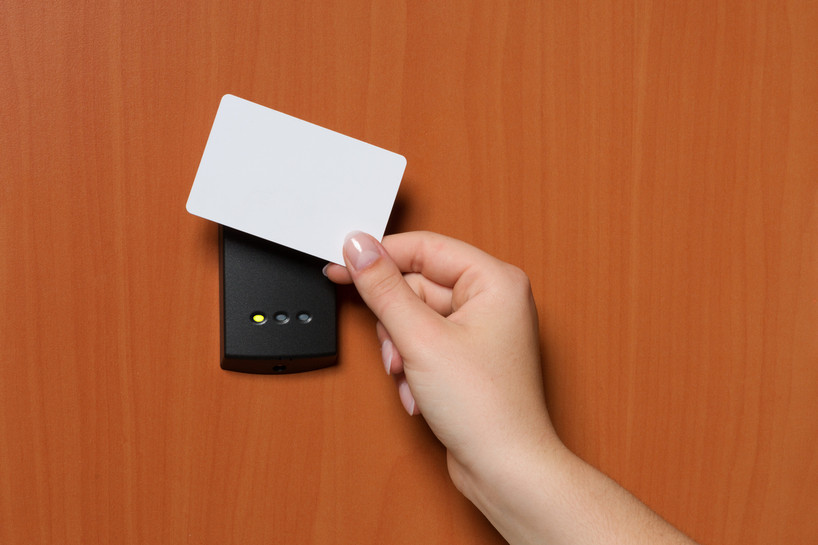
RFID locks have moved well beyond hotel doors and office badges. Today they secure kitchen cabinets, desk drawers, gun stands, display cases and hidden compartments in homes and businesses of every size. The appeal is simple: tap a card or fob and the lock opens, with no key to carry and often no visible lock at all. In this guide we break down the biggest benefits of RFID locks, where they work best and what to know before you buy one.
What Is an RFID Lock?
RFID stands for radio frequency identification. An RFID lock contains a small reader. Each card, fob or tag carries a chip with a unique ID. When you hold an authorized credential close to the reader, the lock recognizes it and releases.
Most RFID cabinet locks are set up with a management card and one or more user cards. The management card is used to add or remove user credentials, and the user cards or fobs open the lock day to day. Many locks ship with their cards already programmed, so you can start using them as soon as the batteries are in.
RFID locks generally use one of two frequencies:
- 13.56 MHz (often called Mifare or NFC-compatible)
- 125 kHz (low frequency)
The two are not cross-compatible, so a 125 kHz card will not open a 13.56 MHz lock. Keep that in mind when you buy spare cards or fobs.
The Biggest Benefits of RFID Locks
1. Fast, contactless access
With an RFID lock there is nothing to insert, turn or type. You simply hold the card or fob near the reader. That makes RFID locks ideal when your hands are full, when you open the same cabinet many times a day, or when several people need quick access. It also helps anyone who finds small keys fiddly, since a card or fob is easy to hold and present in one smooth motion. And there is no keyhole or keypad to wear out over time.
2. Completely hidden installation
This is one of the most popular benefits of RFID locks for cabinets and furniture. A hidden RFID lock mounts on the inside of the door or drawer and reads the card straight through the wood. From the outside there is no keyhole, no keypad and no clue that the cabinet is locked at all.
That makes RFID locks a favorite for concealment furniture, hidden gun storage, secret shelves, medicine cabinets and any piece of furniture where you want a clean look. Each lock lists the panel thickness it can read through. For example, our Gen 3 hidden RFID cabinet lock is rated for 16mm to 30mm wooden panels. If you are weighing an upgrade, our article on why it's time to upgrade to hidden RFID cabinet drawer locks covers more reasons homeowners make the switch.

Hidden RFID Cabinet Lock, Gen 3
Mounts out of sight on 16mm to 30mm wood panels. Cards come programmed, just add batteries.
Shop Now3. No keyhole to pick and no key to copy
Because a hidden RFID lock has no exposed keyhole, there is nothing for someone to pick or force from the outside. Credentials are also harder to duplicate casually than a metal key, which anyone can take to a key-cutting counter. And if a card goes missing, you are not stuck rekeying or replacing the whole lock.
4. Easy to add and remove users
Managing people is where RFID locks really shine compared with keys. With the management card you can add a new user card or fob in seconds. If someone leaves, loses a card or no longer needs access, you can reset or reprogram the lock so that card stops working. For businesses, rentals and shared homes, that flexibility saves both money and hassle.
5. One credential for several locks
Many RFID cabinet locks let the same card open several locks, so one fob can cover all the drawers in a desk or all the cabinets in a room. Some systems go further and link locks together. Our RFID hidden cabinet multiple lock system connects up to five locks, so one scan opens all of them at once. That is ideal for long cabinets, wide drawers or furniture with several hidden compartments.
6. A choice of credentials
RFID does not have to mean a card in your wallet. Depending on the lock and frequency, you can use cards, small key fobs for a key ring, wristbands or adhesive RFID sticker tags. Some locks also come with a remote fob. You can find replacement and extra credentials in our RFID accessories, along with strike plates, power supplies and cables.

Invisible RFID Lock with Key Fob
Open with a 13.56 MHz RFID card or the included remote fob.
Shop Now7. Works on wood and glass
RFID is not limited to wooden cabinets. Glass cabinet RFID locks secure single and double glass doors, and some need no glass drilling at all. Our glass cabinet RFID lock, for instance, offers a manual mode (scan to open, scan to close) and an auto-close mode that relocks the plunger about five seconds after opening, so you can simply shut the door.
8. Low maintenance
Hidden RFID locks have few moving parts and nothing exposed to dust, spills or wear on the outside. Most run on standard AAA batteries. Many models also include a power jack so you can connect an external power supply or power bank if the batteries run low, which gives you a dependable backup.
9. Simple, DIY-friendly setup
You do not need a computer, special software or a locksmith to get started with most RFID cabinet locks. Programming is done with the cards themselves, and installation usually involves a few screws, a strike plate and a set of batteries. For woodworkers and DIY builders, that means a professional-looking locking system can be added to a project in an afternoon.
RFID Locks vs Traditional Keyed Locks
Keyed locks still have their place. They are inexpensive, need no power and are simple to understand. Here is how the two compare for everyday cabinet and drawer use:
- Visibility: A keyed lock shows a keyhole on the outside. A hidden RFID lock shows nothing.
- Lost credentials: Losing a key can mean rekeying or replacing the lock. Losing a card means reprogramming the lock and adding a new card.
- Several users: Sharing keys is hard to control. RFID lets you add and remove individual cards or fobs.
- Power: Keyed locks need none. RFID locks need batteries or an external power option.
- Speed: RFID opens with a tap, even with your hands full.
For low-risk storage that rarely changes hands, a keyed lock may be all you need. When discretion, convenience or user control matter, RFID usually wins.
Where RFID Locks Make the Most Sense
- Homes: medicine cabinets, cleaning supplies, liquor cabinets, home offices, jewelry drawers and childproofing.
- Firearm storage: hidden gun cabinets, stands and concealment shelves where quick access matters.
- Concealment furniture: hidden compartments in beds, mirrors, shelves, end tables and benches.
- Offices: file drawers, supply cabinets and staff storage where people change over time.
- Retail: display cabinets and behind-the-counter storage.
- Gyms, spas and rentals: lockers and owner closets where you need to hand out and take back access often.
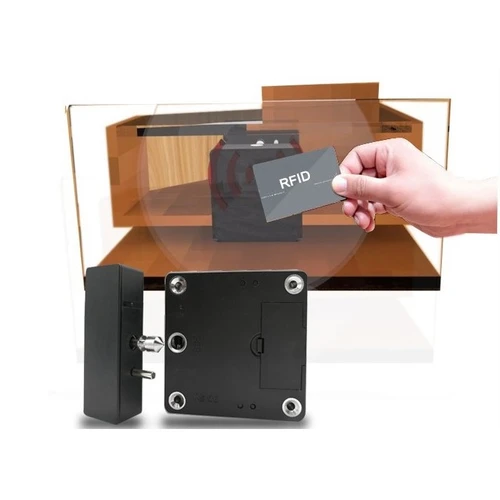
Bluetooth and RFID Hidden Drawer Lock
Open with RFID cards or your iPhone over Bluetooth (iOS only). Ideal for gun stands and cabinets.
Shop NowHow to Choose the Right RFID Lock
Once you know RFID is right for your project, a few details decide which model fits best.
Mounting surface and thickness
Check whether you are locking a wooden door, a drawer or a glass door, and measure the panel the lock will read through. Hidden locks list a supported range, and glass locks list the glass styles they fit.
Strength
Standard hidden locks use a tough ABS housing and suit most household cabinets. For higher-value storage, consider a reinforced model. Our reinforced RFID hidden cabinet lock uses a heavy-duty zinc alloy body with a stated break strength of about 100 foot-pounds, compared with about 60 foot-pounds for our Gen 3 ABS lock.
Locking behavior
Some locks relock automatically when the door closes, while others use a scan-to-open, scan-to-close mode. Automatic locking is convenient for busy cabinets, and scan-to-close gives you full control over when the lock engages.
Single lock or system
If you are securing several doors or drawers in one piece of furniture, a linked multiple lock system can be simpler than separate locks. For larger projects, multi-packs and ten-lock systems are also available, which helps furniture makers and businesses that fit out many cabinets at once.
Extra features
Some locks add a knob, an external sensor for metal cabinets, a silent mode or Bluetooth access from a phone app. Choose the features you will actually use.
Limitations to Know Before You Buy
RFID locks are a great fit for many projects, but they are not perfect for every situation. Knowing the limits helps you choose well.
- Metal and mirrors block the signal. A hidden RFID lock reads through wood and similar materials but will not work through metal or mirrors. For metal cabinets, choose a model with an external sensor.
- Reading distance is short. Cabinet locks are designed for close range. Small fobs may need to be within about an inch, and thicker or denser wood reduces the range.
- Frequency must match. Spare cards and fobs must use the same frequency as the lock.
- Batteries need attention. Like any electronic lock, an RFID lock needs fresh batteries or a backup power option.
- Most cabinet locks do not keep access logs. Large building systems can record who entered and when, but standalone cabinet locks are designed for simple, reliable access rather than tracking.
For a side-by-side view of how RFID compares with fingerprint, keypad and Bluetooth locks, read comparing RFID locks to other electronic locking systems.
Tips for Getting the Most From Your RFID Lock
- Test before you install. Hold the card against the panel you plan to read through and confirm the lock responds before you fix it in place.
- Check panel thickness. Match the lock's rated panel range to your door or drawer front.
- Keep the management card somewhere safe. Anyone with it can add new users, so store it away from the cabinet it controls.
- Order spare user cards or fobs. Having a spare on hand means a lost card is a minor issue rather than a lockout.
- Plan your power backup. If your model has a power jack, keep a compatible power bank or adapter where you can find it.
- Replace batteries on a schedule. Do not wait for the lock to stop responding.
If your lock ever stops reading a card or will not open, our guide to troubleshooting common issues with RFID locks walks you through the usual fixes.
Frequently Asked Questions
Are RFID locks secure?
Yes, for cabinet, drawer and furniture use they offer strong everyday security. A hidden RFID lock has no keyhole to pick, and only programmed credentials open it. For extra strength, reinforced models with metal lock bodies are available.
Can an RFID lock read through wood?
Yes. Hidden RFID locks are designed to read through wooden panels within a stated thickness range, such as 16mm to 30mm. They will not read through metal or mirrors.
What happens if I lose my RFID card?
Use the management card to reset or reprogram the lock and add a new user card or fob. The lost card will no longer open the lock once it has been removed.
What is the difference between 13.56 MHz and 125 kHz RFID?
They are two different radio frequencies. Locks and credentials must use the same one. 13.56 MHz is often NFC-compatible, while 125 kHz is a lower-frequency standard.
Do RFID locks need batteries?
Most cabinet RFID locks run on AAA batteries. Many also have a power jack for an external power supply or power bank as a backup.
Enjoy the Benefits of RFID Locks in Your Home or Business
The biggest benefits of RFID locks come down to convenience, discretion and control. They open with a quick tap, hide completely inside your furniture, have no keyhole to pick and make it easy to add or remove users. Whether you are securing a medicine cabinet, building concealment furniture or managing storage at work, there is an RFID lock that fits.
Browse our full range of RFID locks for wood and glass to find hidden, reinforced, glass-door and multiple-lock systems, and contact Lock Connection if you would like help choosing the right model for your project.