

Lock and security technology has changed enormously in the last decade. Fingerprint sensors, RFID cards, Bluetooth apps and hidden magnetic locks have joined traditional keyed locks, and there are now more products to choose from than ever. More choice is good, but it raises a fair question: who checks that all of these products actually work the way the box says they do?
At Lock Connection, we believe that job should not fall on the customer. That is why lock product testing is part of how we decide what to sell. We test every product we offer at our facility in Lancaster, PA, and sometimes testing takes more than a year before a product goes on sale. In this article we explain why we do it, what we look at for different kinds of hardware, what it means for you, and how you can check your own lock after installation.
Why We Test Lock Products Before We Sell Them
A lock is a promise. It promises that the drawer will stay shut, that the cabinet will open for the right person and not for anyone else, and that it will keep doing so for years. A lock that fails, either by not opening for its owner or by opening when it should not, causes real stress and sometimes real loss.
Product listings can only tell you so much. Specifications describe how a product is supposed to behave. Testing shows how it actually behaves once it is mounted on a real cabinet door, opened and closed day after day, and used by real people with real fingers, cards and phones. Problems with fit, alignment, battery behavior and sensor reliability often only show up in that kind of hands-on use.
Testing also helps us write better product descriptions. When we know how a lock behaves in practice, we can tell you the things that matter: which panel thickness it suits, whether it will read through metal, what it does when the batteries run low, and which phones the app supports. That information helps you choose correctly the first time.
We work with many manufacturers that are ISO 9001 certified, which is an important starting point for quality. Our own testing is the second step: making sure each product works the way our customers will actually use it.
Testing Mechanical Hardware: Fit and Range of Motion
Many of our products are mechanical, and many of them have a specified range of motion. A cabinet hinge has an opening angle and an overlay. A cam lock has a cam that must turn and seat correctly. A lock that works together with a cabinet hinge has to let the door open and close smoothly without binding.
When we test this kind of hardware, we are asking practical questions:
- Does it fit the panel thicknesses and cabinet styles it is sold for?
- Does it open and close easily through its full range of motion?
- Does it keep working smoothly after repeated use, or does it start to stick, loosen or drift out of adjustment?
- Are the instructions clear enough for a homeowner or woodworker to install it correctly?
A hinge or lock that becomes a hassle after a few weeks is not a product we want to put our name behind. Checking mechanics before a product reaches the shelf saves our customers time, effort and frustration. You can see the results across our cabinet hinges, from compact face frame hinges to soft close and concealed styles.

Soft Close Face Frame Hinge
105-degree compact hinge with a soft close action, sold as a pair.
Shop NowTesting Biometric and Fingerprint Locks
Biometrics has come a long way. The idea that you can open a cabinet with your fingerprint instead of a key or combination is now practical and affordable. But a fingerprint lock is only useful when it works reliably. If it rejects the owner's finger half the time, it is a daily frustration. If it is slow or hard to program, people stop using it.
That is why we test the biometric side of our fingerprint locks before we sell them. The areas that matter most to customers include:
- Enrollment. How easy it is to add management and user fingerprints. Our G2 reinforced fingerprint cabinet lock, for example, stores 10 management fingerprints and 10 user fingerprints.
- Recognition. Whether enrolled fingers open the lock consistently in everyday conditions.
- Power behavior. What the lock does as batteries run down. Many of our fingerprint locks give a low-voltage alarm, and some are designed so that total battery drainage leaves the lock unable to lock, so the owner is never locked out.
- Installation. Whether the cable between sensor and lock, the mounting and the instructions make sense in a real cabinet.
Once your lock is installed, a little care keeps it performing well. Our guide on how to maintain and care for fingerprint locks covers cleaning, batteries and mechanical checks.

Fingerprint Round Cabinet Lock
Fingerprint-only cabinet lock with a low-voltage alarm and a working life of up to 50,000 cycles.
Shop NowTesting RFID and Bluetooth Locks
Electronic locks bring more variables into play: read distance, frequency, programming, apps and power. These are exactly the details that can make or break a customer's experience, so we pay close attention to them.
RFID Locks
Hidden RFID locks mount inside a cabinet and read a card or fob through the door. Read distance depends on the material and its thickness. Several of our RFID locks read through up to about 1.5 inches of hardwood or glass, while RFID will not work through metal or mirrors. Frequency matters too: 13.56 MHz and 125 kHz cards are not interchangeable. Knowing these details lets us describe each lock accurately so you can match it to your project.
Bluetooth Locks
For Bluetooth locks, the app is part of the product, so pairing, sharing access with other users and phone support matter as much as the hardware. Some of our Bluetooth cabinet locks work with iOS only, and we state that clearly on the product page because it matters to anyone with an Android phone.
If you ever run into trouble with an RFID lock, our article on troubleshooting common issues with RFID locks walks through the usual causes and fixes.
Testing Drawer Slides, Magnets and Keyed Locks
Drawer Slides and Load Ratings
Drawer slides need to carry weight and move smoothly through their full extension, every time. Our undermount concealed soft close slides, for example, are 66 lb BIFMA load rated, full extension and made of galvanized steel in an ISO 9001 and ISO 14001 certified facility. Read more about why that material matters in galvanized steel in drawer slides.
Magnets and Magnetic Locks
Magnetic products have their own functionality to check. A magnetic safety lock, for instance, has to release reliably when the magnetic key is held against the outside of the door, and stay closed when it is not. Our safety magnetic lock set works through doors up to about 30 mm (1.2 inches) thick, so we state that limit clearly.
Keys and Cylinders
Even a traditional lock and key system benefits from testing for fit. A key should turn smoothly without forcing, and a cylinder should operate cleanly. Small differences in fit can make the difference between a lock that works for years and one that becomes a daily annoyance.
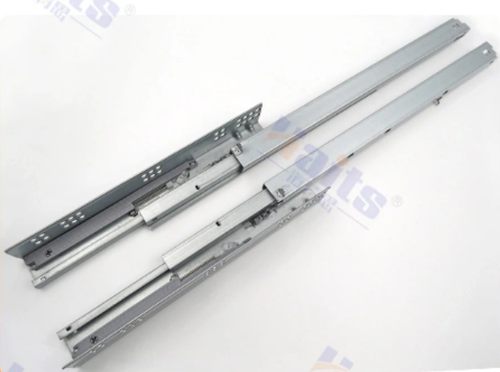
Undermount Soft Close Drawer Slides
Full extension, 66 lb BIFMA load rated galvanized steel slides, sold in pairs.
Shop NowWhat Product Testing Means for You
For our customers, testing comes down to confidence. It is the difference between buying a generic product and buying something that has been checked and screened to our satisfaction before we recommend it.
- Fewer surprises. Products behave the way their descriptions say they will.
- Clearer information. Product pages include practical details such as panel thickness, read distance, power behavior and app compatibility.
- Better support. Because we know our products in depth, our technical customer service team can answer real questions about installation and use.
- A guarantee behind it. We offer a 100% satisfaction guarantee. If you are not satisfied, call us and we will work to find a solution.
With more than 20 years of experience in the industry, we serve large OEM companies, small businesses, woodworkers and individual homeowners. Learn more about our story on our About Us page.
Questions to Ask Before You Buy Any Lock
Whether you buy from us or anywhere else, a few questions will tell you a lot about whether a lock has been properly checked and whether it suits your project.
- What panel thickness and material is it designed for? A hidden RFID lock that reads through 3/4-inch wood may not read through a thicker panel, and no RFID lock reads through metal.
- What happens when the batteries run low? Does it warn you? Does it stay locked or unlock when the batteries are fully drained? Both designs exist, and the right choice depends on what you are storing.
- Is there a backup way in? Look for a key override, a power port or a second access method.
- Which phones does the app support? For Bluetooth locks, confirm iOS and Android support before you buy.
- What comes in the box? Check for screws, strikes, cards, fobs, batteries and instructions, so installation day goes smoothly.
- Can you talk to someone who knows the product? A supplier that tests what it sells can answer detailed questions instead of reading the box back to you.
If a seller cannot answer these questions, that tells you something too. Clear, specific answers are a good sign that the product has been looked at closely by someone who understands how it will be used.
How to Test Your Lock After Installation
Our testing does not replace a quick check of your own installation. Every cabinet, door and panel is a little different, so test your new lock before you trust it with anything important.
- Test with the door open first. Before closing a cabinet with a new electronic lock, operate the lock with the door open so you cannot lock yourself out.
- Check alignment. Close the door slowly and confirm the latch or bolt meets the strike cleanly without rubbing.
- Try every method. Test each fingerprint, card, fob, code, app user and key you have set up.
- Check the backup. Make sure you know how to use the key override, power port or emergency method, and keep any backup key outside the locked space.
- Repeat several times. Open and close the lock ten or more times to catch intermittent problems.
- Note the battery date. Write down when you installed the batteries and learn what the low-battery warning sounds like.
- Re-check after a week. Wood can settle and screws can loosen. A quick re-check catches small alignment changes early.
Frequently Asked Questions
Does Lock Connection test every product?
Yes. We test every product we offer at our facility in Lancaster, PA, and sometimes testing takes over a year before a product goes on sale.
Why does testing take so long?
Some issues only appear over time, such as battery behavior, wear on moving parts or how a lock performs through different seasons. Taking the time to test thoroughly means fewer problems for customers later.
What if a product does not work for my project?
Call or email us. Our technical customer service team will help you troubleshoot, and our 100% satisfaction guarantee means we will work with you to find a solution. Note that some products have specific return conditions, which are stated on the product page.
Can you help me choose the right lock?
Yes. Tell us what you are securing, the material and thickness of the door or panel, and how you want to open it. We are happy to recommend a lock that fits.
Do you sell to businesses as well as homeowners?
We do. We work with large OEM companies and small businesses, and our website lets individual homeowners and woodworkers buy the same products.
Shop Hardware That Has Been Tested
Testing is how we make sure the products we sell live up to their promise. From hinges and drawer slides to RFID, Bluetooth and fingerprint locks, every item we offer has been checked at our facility before it reaches you, and our team is ready to help if you have questions.
Browse our fingerprint and biometric cabinet locks, and explore the rest of our tested range for your home, workshop or business. If you do not see what you need, call us. We are always working on new things.