

For most of history, opening a lock meant carrying the right piece of metal. Then came combination dials and keypads, which replaced the key with a number you could remember. Bluetooth locks take the next step: the key becomes your phone, and access becomes something you can grant, schedule and remove with a few taps.
That shift explains why Bluetooth locks have caught on so quickly, on front doors and on the cabinets and drawers inside the home. In this guide we explain how Bluetooth locks work, what makes them appealing, where they fit best, the honest limitations you should know about, and how to choose the right one.
What Are Bluetooth Locks?
A Bluetooth lock is an electronic lock that you can open with a smartphone app over a short-range Bluetooth connection. The lock has a small battery-powered controller and a motor or solenoid that moves the bolt or latch. When your phone, running the lock's app, connects and sends an authorized command, the lock opens.
Most Bluetooth locks are not Bluetooth-only. They usually pair the app with at least one other way in, such as a keypad, a fingerprint sensor, RFID cards and fobs, or a traditional key. That combination is a big part of their appeal, because you get the flexibility of the phone without depending on it completely.
How a Bluetooth Lock Works
The details vary by model, but the basic setup is similar across most Bluetooth locks.
- Install the lock and batteries. Bluetooth locks run on batteries, commonly AA or AAA cells. Some cabinet models also accept an optional power adapter.
- Download the app. Each lock works with a specific app named in its instructions. Check the operating system before you buy, because some apps are iOS only.
- Create the manager account. The first phone to set up the lock usually becomes the manager or admin. Only that account can change settings and add users.
- Share access. The manager invites other users, who install the app on their own phones and receive permission to open the lock.
- Open the lock. When you are within Bluetooth range, you tap to unlock in the app. Range is short by design. One of our hidden Bluetooth cabinet locks, for example, opens from a phone within about 25 feet.
Because the connection is local, a Bluetooth lock does not need your home Wi-Fi to work at the door. The phone and the lock talk directly.
The Appeal of Bluetooth Locks: 6 Reasons People Choose Them
1. No Keys to Carry or Lose
Your phone is already in your pocket. With a Bluetooth lock, it doubles as your key, which means one less thing to carry and one less thing to lose.
2. Share Access Without Copying Keys
This is the feature most owners value most. Instead of cutting a key for a dog sitter, cleaner or visiting relative, you share access through the app. On our Bluetooth residential deadbolts, the app allows single-use sharing or sharing by date and time, so a sitter's access can match the hours they actually work.
3. Remove Access in Seconds
When someone no longer needs access, you remove them from the app. There is no key to chase down and no lock to change.
4. Built-In Backup Methods
Most Bluetooth locks keep a second way in: a keypad code, a fingerprint, an RFID card or a mechanical key. If your phone is not with you, you still have a reliable way to open the lock.
5. Hidden Security for Cabinets and Drawers
Bluetooth cabinet locks often mount completely inside the furniture. With no keyhole on the outside, nobody can tell the drawer is locked, which is ideal for documents, jewelry, firearms and medications.
6. Battery Warnings You Can Act On
Many Bluetooth locks give an audible low-battery alarm, and some also show the battery level in the app. That gives you time to replace batteries before they become a problem.
Bluetooth Locks for Doors vs Cabinets
Bluetooth locks fall into two broad groups, and it helps to know which one you need.
Bluetooth Door Locks
Residential Bluetooth deadbolts replace the deadbolt on an exterior door. They combine a keypad with app access and a key override. Our Bluetooth digital panel deadbolt is a good example: you can open it with a code, the app or a key, and it runs on 3 AA batteries. These locks suit busy households, rental homes and anyone who regularly lets in service providers.
Bluetooth Cabinet and Drawer Locks
Most of the Bluetooth locks we sell are designed for furniture: cabinets, drawers, gun stands, display pieces and hidden compartments. They are smaller, often hidden, and frequently combine Bluetooth with fingerprint or RFID access. For gun cabinets and safes where the lock sits deep inside the furniture, a model such as our Bluetooth and RFID hidden cabinet lock with an external sensor lets you place the reader where your card or fob can reach it.

Fingerprint and Bluetooth Square Lock
Open drawers and cabinets with a fingerprint or your iPhone, with a low-battery alarm.
Shop NowBluetooth Plus Fingerprint, RFID or Keypad
Combination models are where Bluetooth locks really shine, because each method covers a different situation.
- Bluetooth and fingerprint: the owner opens with a fingerprint in a second, while the app lets you share access with someone whose fingerprint is not enrolled.
- Bluetooth and RFID: family members can tap a card or fob, while the manager uses the app to program cards and manage users. On some models, cards and fobs must be programmed through the app before they work.
- Bluetooth and keypad: common on door deadbolts, where a code is the everyday method and the app handles sharing.
If RFID is new to you, our guide to RFID and contactless locking explains how cards and fobs are read and why frequency matters.
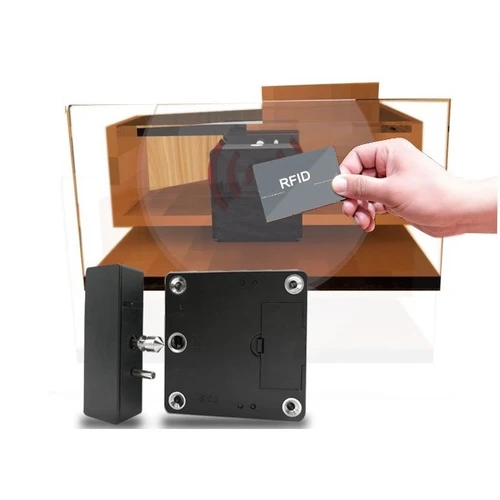
Bluetooth and RFID Hidden Drawer Lock
Hidden lock that opens from your iPhone or with the included RFID key cards.
Shop NowWhere Bluetooth Locks Make the Most Sense
Bluetooth locks are not the answer for every lock in the house, but they are a strong fit in situations where access changes often or keys are a hassle.
- Busy family homes. Kids, grandparents and babysitters can each get their own access, and you can see at a glance who is set up in the app.
- Rental and guest properties. Hosts and landlords can share access for a stay and remove it when the guest leaves, instead of collecting keys or rekeying.
- Service visits. Cleaners, dog walkers and contractors get access only for the time they need it.
- Home offices. A hidden Bluetooth drawer lock keeps client files, checkbooks and laptops private without a visible keyhole.
- Firearm and valuables storage. Hidden Bluetooth and RFID locks inside gun cabinets, stands and concealment furniture give authorized adults quick access while keeping everyone else out.
- Medicine cabinets. Combining Bluetooth with fingerprint access means the people who need the cabinet can open it quickly, while children and visitors cannot.
- Shared spaces. Lockers and storage cabinets in offices, gyms and studios are easier to manage when access lives in an app rather than on a ring of keys.
Bluetooth vs Other Keyless Locks
It helps to see how Bluetooth compares with the other keyless options, since many locks combine several of them.
Keypad Locks
A keypad needs only a code, so anyone you trust can use it without a phone. The trade-off is that codes can be shared further than you intended, and changing them means updating everyone at once. Bluetooth adds individual users and timed access on top.
RFID Locks
RFID cards and fobs are fast and work without a phone, and hidden RFID locks read through wood or glass. However, a lost card has to be deleted and replaced. Bluetooth makes adding and removing users easier, which is why many locks offer both.
Fingerprint Locks
Fingerprints cannot be lent or lost, which makes them ideal for the owner. They are less handy for a one-time visitor, since each person must be enrolled at the lock. Pairing fingerprint with Bluetooth covers both needs.
In short, Bluetooth is the most flexible way to manage who has access, while keypads, cards and fingerprints are often the quickest way to open the lock day to day. The best setups use both.
Honest Limitations to Know Before You Buy
Bluetooth locks are convenient, but they are not magic. Knowing their limits helps you choose and use them well.
- Short range. Bluetooth works near the lock, not from across town. For opening from far away, check what the specific lock and app support.
- Phone compatibility. Some apps work only on iOS. Several of our Kerong-based cabinet locks, for instance, support Bluetooth on iOS only, while other models use apps for both iOS and Android. Always check the product page.
- One manager. Typically only one phone can be the manager. Decide in advance who in the household that should be.
- Battery behavior differs. Some locks are designed to unlock when the batteries are fully drained so you are never locked out. Others stay locked, which is more secure but means you must change batteries on time. Read the product description and follow the low-battery warning.
- Phone security matters. If your phone is your key, protect it with a passcode and keep the app updated.
Many people also ask whether Bluetooth locks can be hacked. The answer depends on how well the lock and its app are built, how solid the physical hardware is, and how carefully the owner manages phones and users. We cover this in depth in can Bluetooth locks be hacked.
How to Choose a Bluetooth Lock
Use these questions to narrow down your choice.
- Door or furniture? Exterior doors need a residential deadbolt. Cabinets, drawers and gun storage need a cabinet lock.
- Which phones will use it? Confirm the app supports every phone in your household.
- What backup method do you want? Key, keypad, fingerprint or RFID. Pick the one that suits the people who will use it.
- Hidden or visible? Hidden locks keep valuables discreet. Visible panels make it obvious the cabinet is secured, which can also be a deterrent.
- How strong does it need to be? For heavier use, look for metal bolts and metal mounting points.
- How will it be powered? Check battery type and expected battery life, and whether an external power option is available.
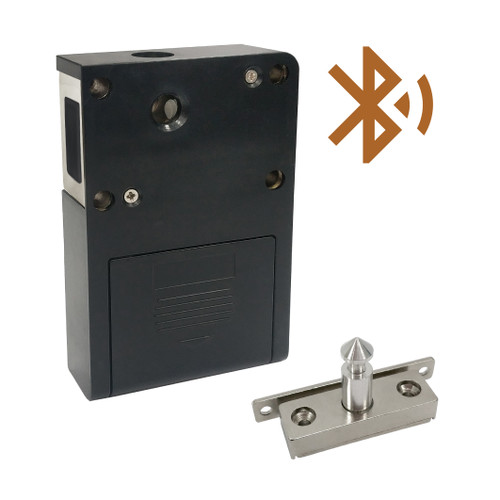
Bluetooth Hidden Drawer Bolt Lock
All-metal bolt action, iOS or Android app, and battery status shown in the app.
Shop NowSetup and Everyday Tips
- Set up the lock and app before you install it in hard-to-reach furniture, so you can test every function at the bench.
- Give users their own access rather than sharing one account. It is easier to remove one person later.
- Keep your backup key, card or code somewhere safe but reachable, never inside the locked cabinet.
- Note the battery change date and replace batteries at the first warning.
- Review your user list every few months and remove anyone who no longer needs access.
For more on balancing ease of use with protection, read how smart locks can increase convenience and security.
Frequently Asked Questions
Do Bluetooth locks need Wi-Fi?
No. A Bluetooth lock connects directly to your phone when you are close to it, so it does not need Wi-Fi to open at the door or cabinet. Features that work from a distance depend on the specific lock and app.
What happens if my phone battery dies?
Use your backup method. Most Bluetooth locks also open with a key, code, fingerprint or RFID card, which is why choosing a model with a backup is so important.
Can several people use the same Bluetooth lock?
Yes. The manager account invites other users, who each use the app on their own phone. Depending on the lock, you can share permanent, single-use or time-limited access.
Are Bluetooth locks hard to install?
Not usually. A residential Bluetooth deadbolt installs much like a standard deadbolt, and cabinet locks come with screws and instructions. Plan where the lock and strike will sit before you drill.
Do Bluetooth locks work with Android phones?
Some do and some do not. Several of our cabinet locks support Bluetooth on iOS only, while others use apps available for both iOS and Android. Check the product description before you buy.
Find the Right Bluetooth Lock for Your Home
The appeal of Bluetooth locks is simple: your phone becomes your key, access becomes easy to share and remove, and a backup method keeps you covered when the phone is not handy. Choose the right type for the job, confirm app compatibility, and keep the batteries fresh, and a Bluetooth lock will make daily life easier without giving up security.
Explore our full range of Bluetooth locks, from residential deadbolts to hidden fingerprint and RFID cabinet locks, and find the one that fits your home.