

Keys get lost, copied and left in the wrong pocket. Combination codes get forgotten or shared further than you meant them to be. That is why more homeowners, gun owners, small businesses and furniture makers are switching to biometric security for the things they want to keep private. The benefits of fingerprint locks come down to three big wins: no keys to manage, access that stays personal to the people you choose, and fast one-touch entry when it really counts.
In this guide, we look at each of those three benefits in detail, show where fingerprint locks make the most sense around the home and workplace, and explain what to check before you buy. If you are new to biometrics, our explainer on how fingerprint locks work covers the technology step by step. Here we focus on the practical payoff.
Why Fingerprint Locks Are Worth a Closer Look
A fingerprint lock replaces the key or code with something you always carry: your finger. You enroll one or more fingerprints, the lock stores them in its own memory, and from then on a quick touch on the sensor tells the lock whether to open. There is nothing to carry, nothing to write down and nothing to hide under a doormat.
Most of the fingerprint locks we sell at Lock Connection are designed for cabinets, drawers, closets, safes and furniture rather than front doors. That is where they shine. They mount on the inside of the cabinet, they run on ordinary batteries, and they turn a regular piece of furniture into a secure, keyless storage space without changing how it looks from the outside.
So what makes them better than a traditional key lock or a simple combination lock? Let's look at the three biggest benefits.
1. No Keys to Lose, Hide or Copy
The first and most obvious benefit of fingerprint locks is that the key problem disappears. With a traditional cabinet lock, the key itself becomes a security risk. It can be lost, misplaced, borrowed and not returned, or quietly copied. Many people end up hiding the key somewhere close to the cabinet, which defeats the point of locking it in the first place.
Your finger is the key
With a fingerprint lock, there is no physical key to keep track of. You cannot leave your fingerprint in the car, drop it in a parking lot or hand it to a child by mistake. For anyone who has ever turned the house upside down looking for a small cabinet key, that alone is worth the switch.
No more hidden spare keys
Spare keys are one of the weak points of any keyed lock. They tend to end up in kitchen drawers, on top of door frames or taped under shelves. A biometric lock removes the need for spares, so there is nothing for a curious visitor or a determined teenager to find.
Lower long-term hassle
Lost keys often mean replacing the whole lock or living with a lock you no longer trust. With a fingerprint lock, you simply manage the enrolled prints. If someone should no longer have access, you remove their fingerprint instead of changing hardware.
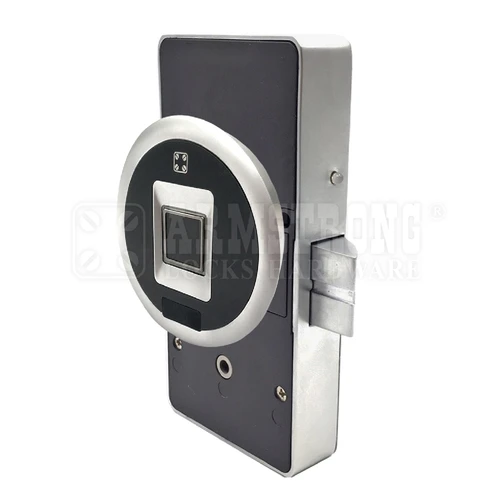
G2 Reinforced Fingerprint Cabinet Lock
Zinc alloy housing, stores up to 20 fingerprints and fits 16-30mm wooden panels.
Shop Now2. Access Stays With the People You Choose
The second big benefit is control. A key or code can be shared, written down or watched over your shoulder. A fingerprint cannot be passed around the same way. Only the people you enroll can open the lock, which makes fingerprint locks a strong choice for anything private, valuable or potentially dangerous.
Personal access for every enrolled user
Fingerprint locks can store more than one print, so the right people can each use their own finger. Several of our Kerong-based cabinet locks store up to 20 fingerprints, and the reinforced G2 lock separates management fingerprints from everyday user prints. That makes it easy to give a partner, a business partner or a trusted employee access while keeping administrative control yourself.
Easy to update when things change
People move out, staff change and children grow up. With a fingerprint lock you can add or remove prints as your needs change, without cutting new keys or wondering who still has an old one. Many models also offer different working modes, such as public and private modes, so the lock can suit a shared locker or a single owner's cabinet.
Ideal for things that should stay out of reach
This kind of personal access is exactly what you want for medications, firearms, important documents, jewelry, cash, chemicals or expensive tools. A fingerprint lock keeps those items in a normal cabinet or drawer while making sure only authorized adults can open it. You still need to follow local laws and good safety practice for things like firearm storage, but biometric access adds a practical layer of protection.
A common worry is that fingerprint locks are easy to fool or unreliable. Our article on separating fingerprint lock facts from fiction takes those myths one by one.

Fingerprint Round Cabinet Drawer Lock
Stores up to 20 fingerprints, with a low-battery alarm and emergency USB power.
Shop Now3. Fast, One-Touch Entry When It Counts
The third big benefit is speed. A good fingerprint sensor reads a print almost instantly. The Kerong fingerprint locks in our catalog list a reaction time of less than 500 milliseconds, so the lock opens in about the time it takes to rest your finger on the sensor.
Hands full? No problem
Think about opening a supply cabinet while carrying boxes, a medicine drawer while holding a child, or a tool cabinet with dirty gloves in one hand. A single touch is far easier than fishing for a small key and lining it up in the dark.
Quick access to safes and gun storage
For gun owners, speed and security have to work together. A firearm should stay locked away from children and visitors, yet you may need to reach it quickly. A compact sensor such as our 24mm fingerprint lock for gun safes and cabinets can be mounted where it is easy to reach, with a cable of about 20 inches between the sensor and the lock body.
Spring release for a smooth open
Many of our fingerprint cabinet locks include a spring release that gives the drawer or door a small push open once the lock releases. It is a small detail, but it makes the whole action feel smooth and fast. The spring can be removed if you prefer a standard open.
Where Fingerprint Locks Work Best
Fingerprint locks fit almost anywhere you want keyless, personal access. Some of the most popular uses include:
- Medicine cabinets and drawers to keep prescriptions away from children, guests or anyone who should not have them.
- Gun cabinets, nightstands and concealment furniture where fast access and secure storage both matter.
- Home office desks and filing drawers holding passports, financial paperwork or client records.
- Closets and wardrobe drawers for jewelry, watches and other valuables.
- Workshops and garages to lock away power tools, sharp blades and chemicals.
- Offices, spas, salons and gyms where staff need personal lockers or shared supply cabinets.
- Retail back rooms and display areas where only certain employees should open stock drawers.
If you need to secure several drawers or doors at once, a multiple fingerprint lock system lets one sensor panel operate up to five locks, all opening together with a single touch.
How to Choose the Right Fingerprint Lock
Once you know where the lock will go, a few simple questions will point you to the right model.
Surface mount or flush mount?
Surface-mount sensors sit on the outside of the panel and are the simplest to install. Flush-mount sensors sit level with the surface for a cleaner look, but they need an accurate cut-out. Check the product page for the exact hole size before you start drilling.
Sensor style and placement
Fingerprint sensors come in round and square styles and in different sizes. Most locks include a short cable between the sensor and the lock body, and many offer longer cables as an option. A longer cable lets you place the sensor where it is easiest to reach while keeping the lock body hidden inside.
Fingerprint only, or a backup method too?
Some people prefer a second way in. A password and fingerprint combination lock opens with either a fingerprint or a code, which is handy for a family member whose prints are hard to read. Other models add Bluetooth, so you can open the lock or share access from a phone app.
Power and battery behavior
Our fingerprint cabinet locks run on AAA batteries, and many can also use an optional 6V DC adapter. Look for a low-voltage alarm so you get a warning well before the batteries run out. Also check what the lock does when power is fully drained. Some models are designed so they cannot lock, which avoids a lockout, while others stay locked and let you plug in emergency power through a USB port to open them and change the batteries. Choose the behavior that suits what you are storing.
Build quality
For high-value or high-risk items, look for features such as a metal housing and reinforced stress points. Check the panel thickness the lock is designed for as well. For example, our reinforced G2 model is made for 16 to 30mm wooden panels.

Fingerprint and Bluetooth Square Drawer Lock
Open with your fingerprint or the Kerong app (Bluetooth works with iOS only).
Shop NowTips to Get the Most From Your Fingerprint Lock
A fingerprint lock is low maintenance, but a few good habits will keep it fast and reliable for years.
- Enroll more than one finger. Register a second finger in case of a cut, bandage or dry skin on your main finger.
- Enroll carefully. Press the finger flat and cover the whole sensor during setup. A good enrollment means faster, more consistent reads later.
- Keep the sensor clean. Wipe it gently with a soft, dry or slightly damp cloth. Dust, grease and lotion can slow reads.
- Change batteries when the alarm sounds. Do not wait for the batteries to die completely, and use good-quality alkaline batteries.
- Review enrolled prints from time to time. Remove anyone who no longer needs access, especially in shared spaces and workplaces.
- Follow the instructions and videos. Our fingerprint locks come with written instructions, and many have setup videos that walk through programming.
Fingerprint Locks vs. Keys and Codes at a Glance
Here is a quick comparison to help you decide whether a biometric lock is the right upgrade:
- Traditional key lock: simple and affordable, but keys can be lost, copied or found, and changing who has access usually means new hardware.
- Combination or keypad lock: no key to carry, but codes can be forgotten, shared or seen by someone standing nearby.
- Fingerprint lock: nothing to carry or remember, personal access for each enrolled user, quick one-touch entry and easy updates when people come and go.
For most cabinets, drawers and safes that hold private or valuable items, the fingerprint lock offers the best balance of convenience and control.
Frequently Asked Questions
How many fingerprints can a fingerprint cabinet lock store?
It depends on the model. Several of the fingerprint cabinet locks we carry store up to 20 fingerprints. The reinforced G2 lock stores 10 management fingerprints and 10 user fingerprints. Check the product page for the exact number.
What happens when the batteries run low?
Most of our fingerprint locks give a low-voltage warning with sound and light so you can change the batteries in time. What happens after a complete drain depends on the model, so read the product details and choose the one that suits your needs.
Are fingerprint locks hard to install?
No. Most cabinet and drawer fingerprint locks screw to the inside of the door or drawer and connect to the sensor with a short cable. Instructions and screws are included, and flush-mount models just need an accurate cut-out for the sensor.
Can I use a fingerprint lock on my front door?
The fingerprint locks in our catalog are built for cabinets, drawers, closets, safes and furniture. For exterior doors, look at our keypad and Bluetooth residential deadbolts, which are designed for that job.
Can I give someone access when I am not there?
With a fingerprint-only lock, that person must be enrolled in advance. If you want to share access remotely, choose a model with Bluetooth app control or a password option.
Enjoy the Benefits of Fingerprint Locks With Lock Connection
The benefits of fingerprint locks are simple and practical: no keys to lose or copy, access that stays with the people you trust, and fast one-touch entry whenever you need it. Whether you want to secure a medicine drawer, a home office, a gun cabinet or a whole wall of storage, there is a biometric lock that fits.
Browse our full range of fingerprint cabinet and drawer locks to compare sensor styles, mounting options and features. If you have questions about which model suits your project, call or email the Lock Connection team. We are happy to help you choose.