
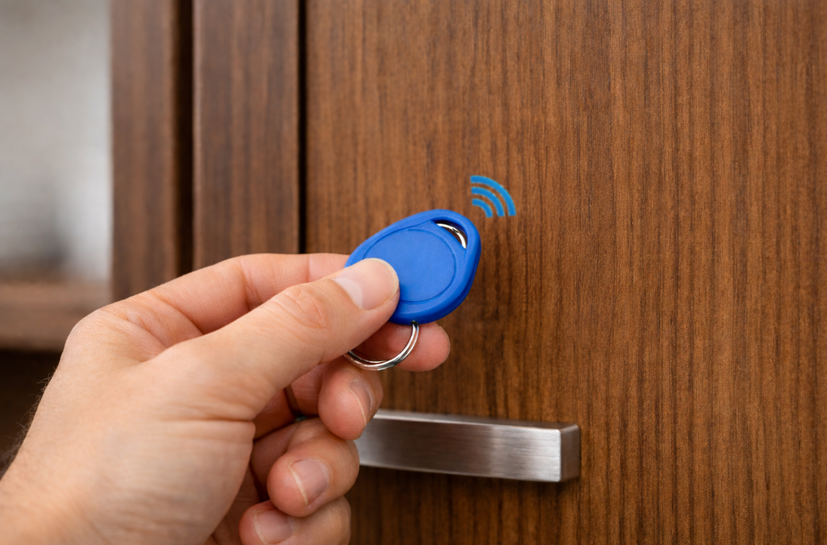
Access control systems have come a long way from traditional keyed locks and one of the most user-friendly innovations you’ll find today is the key fob entry system. At Lock Connection®, LLC, we offer RFID-enabled products that make secure, keyless access both simple and reliable.
What Is a Key Fob Entry System?
A key fob entry system uses a small, portable device — the key fob — that communicates with a locking mechanism. These fobs contain a unique identifier programmed onto them, which is recognized by RFID (Radio Frequency Identification) enabled locks. When the key fob is brought close to the reader, the system verifies its identity and grants access without any physical key turning.
Unlike traditional metal keys, key fobs are contactless and can be easily carried on a key ring or in a pocket. They pair seamlessly with various Lock Connection RFID locks to unlock cabinets doors with a quick scan.
How Does a Key Fob Entry System Work?
Here’s a step-by-step breakdown of what happens when you use a key fob:
- Built-In RFID Chip – Each key fob has a tiny RFID chip with a unique ID programmed into it.
- Activation – When the fob comes within close range of a compatible RFID reader in a lock, the reader emits a low-power signal.
- Communication – The key fob receives this signal and transmits its ID back to the reader.
- Verification – The system checks the ID against its authorized list.
- Access Granted – If it matches, the lock disengages, granting entry without traditional keys. If not, access is denied.
This setup is ideal for spaces where quick, secure, and keyless access is needed like cabinets, rooms, furniture, or controlled access areas.
Why Use a Key Fob System?
Key fob systems offer several advantages over old-school locks:
- No Keys to Lose or Copy – Say goodbye to misplaced keys and duplicated metal keys that weaken security.
- Fast Access – A simple scan is all it takes to enter.
- Easy Pairing – Systems can be set up so multiple fobs work with the multiple locks, controlled by a manager card.
- Versatile Use – From hidden cabinet locks to residential invisible door locks, key fobs work with a range of RFID products we offer.
125 kHz vs. 13.56 MHz Key Fobs: What’s the Difference?
Not all key fobs are the same. At Lock Connection®, we offer both 125 kHz and 13.56 MHz RFID key fobs, and understanding the difference helps ensure you choose the right option for your access control system.
125 kHz Key Fobs
125 kHz key fobs are a low-frequency RFID option commonly used for basic access control applications. These fobs are reliable, simple to program, and widely compatible with many RFID cabinet locks and access systems. They are ideal for straightforward setups where durability and ease of use are the priority.
13.56 MHz Key Fobs
13.56 MHz key fobs operate at a higher frequency and are often used in more advanced RFID systems. These fobs allow for faster communication with the reader and are commonly found in newer or more feature-rich access control solutions. They are a great choice for systems that require higher performance or expanded compatibility with modern RFID locks.
Choosing the Right Frequency
The most important factor when selecting a key fob is compatibility. Your RFID lock or access system will specify whether it uses 125 kHz or 13.56 MHz technology. Using the correct frequency ensures reliable performance and seamless access.
At Lock Connection®, we offer both options so you can match your key fobs perfectly with your existing RFID locks, hidden cabinet systems, or complete lock kits.
Conclusion
At Lock Connection®, LLC, we specialize in RFID locks, key fobs, and complete access control solutions designed for dependable performance and easy integration. Explore our products and resources to find the right key fob entry system for your project.