
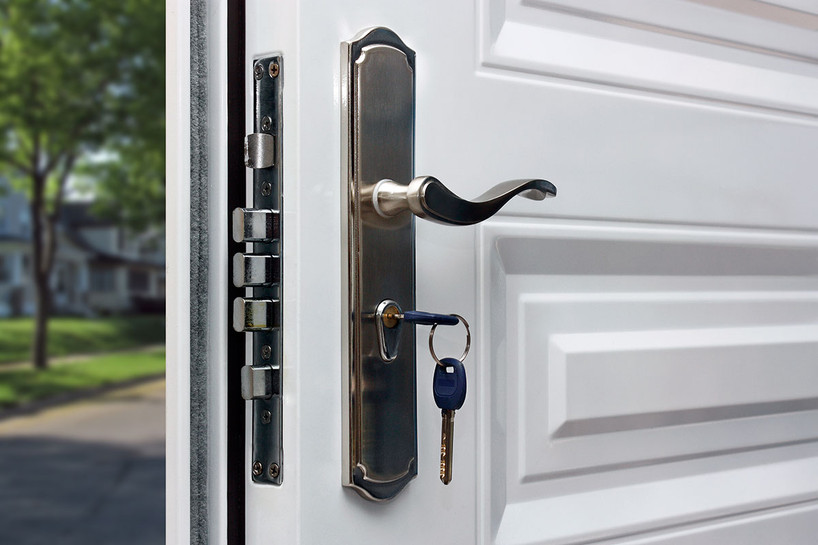
Your door locks do more than any other piece of hardware to decide how easy or hard it is to get into your home. Yet most homeowners stick with whatever locks came with the house, or grab the first deadbolt they see at the hardware store when something breaks. That is a missed opportunity. The right lock depends on the door, the room behind it, the people who need access, and how much convenience you want day to day.
Choosing door locks for your home doesn't have to be confusing. In this guide we walk through the considerations that matter most, from where the lock goes and how it's rated to keyless technology, installation fit, maintenance and budget. By the end you'll know exactly what to look for and which questions to ask before you buy.
Why Choosing the Right Door Locks for Your Home Matters
Burglars usually take the path of least resistance. A worn lock, a short deadbolt throw, a flimsy strike plate or a lock that can be opened with a copied key makes your home an easier target than the house next door. A well-chosen lock, installed properly, adds time and difficulty to a break-in attempt, and time is exactly what an intruder doesn't want to spend at your door.
Security isn't the only reason to upgrade. The right locks can also:
- Simplify daily life by letting you enter with a code, phone or card instead of hunting for keys.
- Control who gets in and when, which is useful for families, dog walkers, cleaners and rental guests.
- Remove the risk of old keys held by previous owners, tenants or contractors.
- Protect specific spaces inside the home, such as a home office, storage room or hidden room.
If you have just moved into a home, replacing or rekeying the exterior locks should be one of the first jobs on your list. You have no way of knowing how many copies of the old keys are still out there.
1. Start With Where the Lock Will Be Installed
The first and most important question is simple: which door is the lock for? Exterior and interior doors have very different jobs, so they need very different hardware.
Exterior Doors
Front doors, back doors, side entries and the door between an attached garage and the house are your primary security barriers. These doors need a deadbolt, not just a spring-latch knob or lever. A deadbolt uses a solid bolt that can't be pushed back with a card or thin tool, and it should extend at least one inch into the door frame when fully thrown.
Exterior locks also face weather. Rain, humidity, direct sun, freezing temperatures and salty coastal air all shorten the life of cheap hardware. Look for durable finishes and, for electronic models, check the listed operating temperature range against your local climate. Many of our electronic residential door locks are rated to work from -10°C to 45°C (14°F to 113°F), which covers most household environments.
Interior Doors
Most interior doors only need privacy locks for bedrooms and bathrooms, or passage sets with no lock at all for hallways and closets. Some interior spaces deserve more, though:
- Home offices holding confidential paperwork or equipment
- Storage rooms, wine rooms or hobby rooms with valuable items
- Utility or mechanical rooms you want to keep children out of
- Secret rooms or bookcase doors where the lock should stay out of sight
For concealed spaces, a hidden lock can be the best of both worlds. The RFID smart invisible door lock for hidden rooms keeps the outside of the door completely clean, opens with an RFID card or Bluetooth fob, and has a pull-down handle on the inside so no one can get locked in. It's designed for indoor use only, which makes it a good match for bookcase doors and private rooms rather than entry doors.
Doors Inside the Room: Cabinets and Storage
Door security doesn't stop at the doorway. Medicine cabinets, firearm storage, jewelry drawers and closet cabinets often hold the items you most want to protect. Instead of relying on a single lock on the room door, many homeowners add a second layer with fingerprint cabinet and drawer locks that open only for enrolled users.
2. Understand the Main Types of Residential Door Locks
Once you know where the lock is going, you can narrow down the style. Here are the lock types you'll come across most often.
Single-Cylinder Deadbolts
This is the most common exterior lock in North America. It has a key cylinder outside and a thumb-turn inside. Single-cylinder deadbolts offer strong protection and let anyone inside leave quickly in an emergency, which is why they are the standard choice for most homes.
Double-Cylinder Deadbolts
These need a key on both sides. They can make sense next to glass panels, where an intruder might break the glass and reach in to turn a thumb-turn. The trade-off is safety: in a fire, you need the key to get out. Some local building and fire codes restrict double-cylinder deadbolts in homes, so check local rules before installing one.
Knob and Lever Locks
Knob and lever locks have a lock built into the handle. They are convenient, but the spring latch on its own offers limited protection. On exterior doors, they should always be paired with a deadbolt. Levers are easier to use for children, older adults and anyone with limited hand strength.
Keypad and Push-Button Locks
Keypad locks replace or supplement the key with a numeric code. Digital touch panels and mechanical-feel push buttons both work well. Codes can be changed whenever you like, so you never need to track down lost keys or pay to rekey after a roommate moves out. A digital keypad deadbolt with backup keys is a popular first step into keyless entry because the physical key still works if you ever need it.
Smart and Bluetooth Locks
Smart locks connect to an app on your phone. Depending on the model, you can unlock the door from your phone, send temporary access to a guest, or share entry that works only on certain dates and times. For busy households, short-term rentals and homes with regular service visits, this flexibility is a real advantage. A Bluetooth push-button deadbolt with key override combines app access, a keypad and a traditional key, giving you three ways in.
RFID and Biometric Locks
RFID locks open with a card, key fob or tag held near the reader, and biometric locks open with a fingerprint. Both remove the need to remember a code or carry a key. They are especially useful where access has to stay personal and can't be shared casually, since a fingerprint can't be lent to someone else the way a key or code can.
3. Mechanical or Electronic: Which Is Right for You?
This is one of the biggest decisions in choosing door locks for your home, and there's no single right answer. Each approach has clear strengths.
Advantages of Mechanical Locks
- No batteries, apps or electronics to maintain
- Usually lower upfront cost
- Familiar and simple for every member of the household
- Long service life when well made and maintained
Advantages of Electronic Locks
- No keys to lose, hide under the doormat or copy
- Codes and credentials can be changed or removed instantly
- Temporary or scheduled access for guests and service providers
- No traditional keyway to attack on keyless-only models, and a smaller role for the keyway on key-override models
Traditional pin-tumbler locks can be vulnerable to picking and bumping, especially lower-quality ones. If that worries you, read our guide on how to prevent lock bumping. Many homeowners settle on an electronic deadbolt with a mechanical key override. They get keyless convenience every day and still have a dependable backup if the batteries run low.
Questions to Ask Before Going Electronic
- What powers it? Most residential electronic locks run on AA or AAA batteries. Find out how the lock warns you when batteries are low.
- Is there a backup? A key override or emergency power option means a dead battery never locks you out.
- Which phones does the app support? Some Bluetooth features work only on certain operating systems, so confirm compatibility for everyone who'll use it.
- How is access shared? Look for features such as single-use codes or date and time limits if you host guests.
- Will it handle your climate? Check the operating temperature range for exterior doors.
4. Check Security Ratings and Build Quality
Not all locks are built to the same standard. In the United States, many locks are tested against standards from ANSI (the American National Standards Institute) and BHMA (the Builders Hardware Manufacturers Association). Locks are commonly graded like this:
- Grade 1: The highest level, usually specified for commercial buildings and high-security residential use.
- Grade 2: Solid residential security, and a good target for most exterior doors.
- Grade 3: Basic protection, generally better suited to low-risk or interior use.
Where a product doesn't list a formal grade, look at the details that point to quality:
- Solid metal bolts and housings rather than thin plastic or light alloys
- A bolt throw of at least one inch
- A reinforced strike plate that fastens into the wall stud with long screws (three inches is a common recommendation)
- A finish that resists corrosion and wear
- Clear instructions and support resources from the seller
Remember that a lock is only as strong as the door and frame it's mounted in. A premium deadbolt on a hollow-core door or a weak, rotting frame won't deliver the protection you're paying for. If your door is damaged or loose, fix that first.
5. Make Sure the Lock Fits Your Door
Nothing is more frustrating than bringing home a new lock and finding out it doesn't fit. Before you order, measure these points:
- Door thickness: Most residential exterior doors are about 1-3/4 inches thick and interior doors about 1-3/8 inches, but many doors differ. Confirm the thickness the lock supports.
- Backset: This is the distance from the edge of the door to the center of the bore hole. The two common sizes are 2-3/8 inches and 2-3/4 inches, and many locks adjust to fit both.
- Bore hole diameter: The standard is 2-1/8 inches for most residential locks. Electronic locks may need extra space for the interior unit.
- Door handing: Some locks and handles are specific to left-hand or right-hand doors, while others include parts for both.
- Door material: Wood, steel, fiberglass and glass doors each have different mounting needs. Wireless locks may not work through metal or mirrored surfaces.
If you're replacing an existing deadbolt, choosing a model that fits the current holes saves time and avoids extra drilling. If you're unsure, a qualified locksmith or installer can confirm the fit and make sure the bolt lines up with the strike plate.
6. Think About Who Needs Access
The people coming and going through a door should shape the lock you choose.
Families With Children
Keypad locks mean kids no longer need to carry a house key that can be lost on the way home from school. Codes can be changed if one is shared too widely, and auto-lock features on some models make sure the door is secured behind them.
Older Adults and Accessibility
Large buttons, lever-style handles and keyless entry are easier to use for anyone with arthritis, limited grip strength or poor eyesight. Being able to give a trusted family member or caregiver access can also bring peace of mind.
Landlords and Short-Term Rental Hosts
Rekeying between tenants or guests costs time and money. Electronic locks with changeable codes, RFID cards or app-based sharing let you issue and cancel access without touching the hardware. Scheduled or single-use sharing is ideal for check-ins, cleaners and maintenance visits.
Home-Based Businesses
If you store inventory, client files or equipment at home, consider layered security: an electronic deadbolt on the entry, a lock on the office door, and biometric or RFID locks on the cabinets and drawers holding sensitive items.
7. Plan for Installation and Maintenance
Many deadbolts and keypad locks are designed for straightforward DIY installation if you're comfortable with basic tools and the existing holes fit. More complex jobs are worth handing to a professional, such as drilling new holes, fitting a lock into a metal or glass door, or installing a concealed lock inside a bookcase door. A lock that isn't aligned properly will wear faster and may not engage fully, which defeats the purpose.
After installation, a little routine care keeps your locks working smoothly for years:
- Test the bolt regularly to make sure it extends fully and moves without sticking.
- Use a graphite or lock-specific dry lubricant on keyed cylinders. Avoid heavy oils that attract dirt.
- Tighten loose screws on the interior and exterior housings.
- Replace batteries in electronic locks as soon as you get a low-battery warning, and keep spares on hand.
- Clean keypads and fingerprint sensors gently with a soft, dry cloth.
- Review and remove old codes, cards or app users you no longer need.
8. Set a Realistic Budget
It's tempting to buy the cheapest lock that looks right, but door locks are one purchase where cutting corners can cost far more later. When you set your budget, think about total value, not just the price tag:
- Put the money where the risk is. Exterior doors deserve your best locks. Interior privacy doors can use simpler hardware.
- Count the hidden costs of keys. Rekeying, lost-key replacements and lockout calls add up, especially for rental properties.
- Look at bundle and quantity pricing. Matching locks across several doors can lower the cost per lock, and quantity discounts help landlords and property managers.
- Weigh convenience. Features like remote sharing and changeable codes save real time every week.
A common misconception is that electronic locks are out of reach for most budgets. In reality, many quality residential keypad and Bluetooth deadbolts cost only modestly more than premium mechanical deadbolts, and they remove many of the ongoing costs of managing keys.
A Quick Checklist for Choosing Door Locks for Your Home
- Decide which doors need new locks: exterior, interior or both.
- Choose the lock type: deadbolt, knob or lever, keypad, smart, RFID or biometric.
- Decide between mechanical, electronic, or electronic with a key override.
- Check the security grade or build quality, bolt throw and strike plate.
- Measure door thickness, backset, bore hole and door handing.
- Think about everyone who needs access and how you'll share or remove it.
- Plan for installation, batteries and simple ongoing maintenance.
- Set a budget that puts your best protection on your most exposed doors.
Frequently Asked Questions
What is the most secure type of lock for a front door?
A well-built deadbolt with a bolt throw of at least one inch and a reinforced strike plate is the foundation of front door security. Many homeowners pair it with electronic features, such as a keypad, Bluetooth or RFID, for easier access control without losing strength.
Should I change my locks when I move into a new home?
Yes. You can't know who still has keys from previous owners, tenants, contractors or real estate agents. Replacing the locks or rekeying them is an inexpensive way to make sure you are the only one with access.
Are electronic door locks safe to use?
Good-quality electronic locks are a secure choice for most homes. Look for sturdy construction, a reliable backup such as a key override, low-battery alerts, and the ability to change codes and remove users quickly.
What happens if the batteries in my smart lock die?
Most electronic locks warn you well before the batteries run out. Models with a mechanical key override can still be opened with the key, and some locks offer emergency power options. Always check how a specific lock handles low power before you buy.
Can I use the same lock on interior and exterior doors?
Not always. Exterior locks are built to resist forced entry and weather, while many interior locks, including concealed locks for hidden rooms, are rated for indoor use only. Always match the lock to where it will be installed.
How do I know if a lock will fit my door?
Measure the door thickness, the backset (usually 2-3/8 or 2-3/4 inches) and the bore hole diameter, then compare them to the lock's specifications. If your door is an unusual size or material, check with the seller or a locksmith before ordering.
Find the Right Lock for Every Door in Your Home
Choosing door locks for your home is really about matching the right hardware to each door and each person who uses it. Start with your exterior doors, pick a lock type that fits your lifestyle, make sure it fits your door and budget, and add layers of protection where your valuables are stored.
Lock Connection offers a wide range of residential deadbolts, keypad and Bluetooth locks, RFID locks and fingerprint locks for homes, rentals and businesses. If you have questions about which lock fits your door or your security needs, contact our team. We're happy to help you find the right solution.